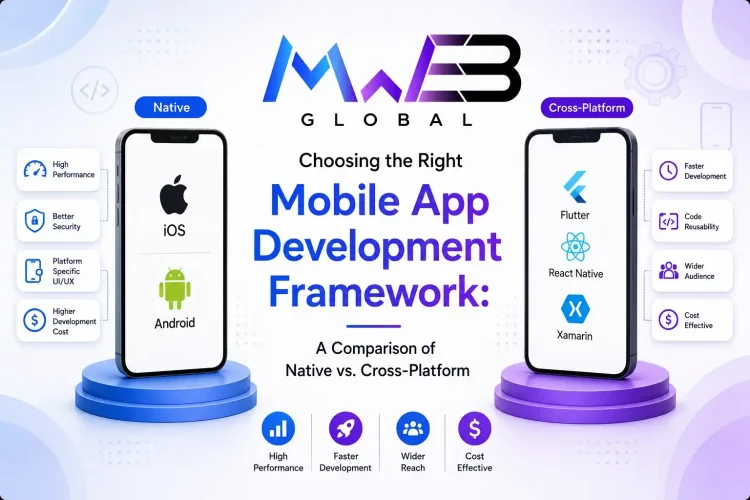
In today’s fast-moving digital world, businesses are increasingly investing in mobile app development to reach customers across Android and iOS platforms. Whether you are a startup, enterprise or working with a mobile app development company, one of the most important decisions you will face is choosing between native app development and cross-platform mobile app development.
This decision directly impacts performance, development cost, time-to-market and long-term scalability of your application.
At Microweb Global, modern development approaches like React Native and Flutter are used to build high-performing cross-platform apps that significantly reduce development time while maintaining near-native performance.
In this guide, we’ll break down everything you need to know about mobile app development frameworks, compare native vs cross-platform approaches and help you choose the best option for your business.
What is Mobile App Development?
Mobile app development is the process of creating software applications that run on mobile devices such as smartphones and tablets. These apps can be developed for:
- Android devices
- iOS devices
- Or both (cross-platform solutions)
Modern mobile application development includes designing UI/UX, backend integration, API development, testing, deployment and ongoing maintenance.
What is Native App Development?
Native app development refers to building applications specifically for a single platform:
- Android (using Kotlin or Java)
- iOS (using Swift or Objective-C)
Key Features of Native Apps:
- High performance and speed
- Full access to device features (camera, GPS, sensors)
- Better UI/UX experience
- Highly secure and stable
Limitations:
- Separate codebase for each platform
- Higher development cost
- Longer time-to-market
Native development is ideal for complex applications such as gaming apps, fintech apps or apps requiring deep hardware integration.
What is Cross-Platform Mobile App Development?
Cross-platform mobile app development allows developers to write a single codebase that works on both Android and iOS platforms.
Instead of building two separate apps, developers use cross-platform app development frameworks to build one application that runs everywhere.
At Microweb Global, cross-platform development is built using technologies like Flutter and React Native, enabling faster delivery and reduced maintenance costs.
Key Benefits:
- One codebase for multiple platforms
- Faster development time
- Lower cost compared to native apps
- Easier maintenance and updates
Common Cross-Platform Frameworks:
- Flutter
- React Native
- Xamarin
- Ionic
Native vs Cross-Platform Mobile App Development
Choosing between native vs cross-platform mobile app development depends on your business goals.
| Feature | Native Apps | Cross-Platform Apps |
| Performance | Very High | High (near-native) |
| Development Cost | High | Lower |
| Time to Market | Slower | Faster |
| Codebase | Separate | Single |
| Maintenance | Complex | Easy |
| User Experience | Best | Very Good |
When to Choose Native:
- High-performance apps
- Gaming applications
- Apps with advanced device features
When to Choose Cross-Platform:
- Startup MVPs
- Business apps
- E-commerce apps
- Budget-conscious projects
Best Cross-Platform Mobile Development Frameworks
If you’re exploring mobile app development frameworks, here are the top choices:
1. Flutter
Developed by Google, Flutter is one of the most popular cross-platform mobile app development frameworks.
- Uses Dart programming language
- Fast performance with native-like UI
- Rich widget library
- Strong community support
2. React Native
Developed by Meta (Facebook), React Native is widely used for scalable mobile applications.
- Uses JavaScript
- Large developer ecosystem
- Easy integration with existing apps
- Fast development cycles
3. Xamarin
- Uses C# and .NET
- Strong for enterprise applications
- Good integration with Microsoft ecosystem
4. Ionic
- Uses HTML, CSS, JavaScript
- Best for hybrid applications
- Suitable for simple mobile apps
Flutter vs React Native: Which is Better?
One of the most common questions in mobile app development services is:
“What is better, Flutter or React Native?”
Both are excellent frameworks, but they differ in key areas.
| Factor | Flutter | React Native |
| Language | Dart | JavaScript |
| Performance | Slightly better | Very good |
| UI Flexibility | Excellent | Good |
| Learning Curve | Moderate | Easy |
| Community | Growing fast | Very large |
Conclusion:
- Choose Flutter app development for high-performance UI-heavy applications.
- Choose React Native app development for faster development and wider developer availability.
What is the Best Platform for Mobile App Development?
There is no single “best platform for mobile app development”. It depends on your requirements:
- For performance → Native development
- For cost efficiency → Cross-platform development
- For scalability → React Native or Flutter
Most modern mobile app development companies in Sri Lanka and globally prefer cross-platform solutions due to faster delivery and lower maintenance costs.
What Are Cross-Platform Applications?
Cross-platform applications are software applications that run on multiple operating systems using a single codebase.
Examples include:
- E-commerce apps
- Booking apps
- Delivery apps
- Business management apps
They are widely used in cross-platform mobile application development because they reduce development complexity and cost.
Cross-Platform Mobile App Development Advantages
- Faster deployment
- Reduced development cost
- Single codebase maintenance
- Easier updates
- Wider audience reach
These advantages make it a preferred choice for businesses looking to build mobile apps quickly and efficiently.
Mobile App Development in Sri Lanka
The demand for mobile app development in Sri Lanka is rapidly growing as businesses shift toward digital transformation. Companies are investing in:
- Android app development
- iOS development
- Cross-platform app development
- Custom enterprise applications
A reliable app development agency can help businesses create scalable and user-friendly applications tailored to market needs.
How to Choose the Right Mobile App Development Approach
When selecting a development approach, consider:
- Budget
- Target audience
- App complexity
- Time constraints
- Long-term maintenance
For most businesses today, cross-platform mobile app development is the most cost-effective and scalable option.
Frequently Asked Questions
1. What is cross-platform mobile development?
Cross-platform mobile development is the process of creating apps that run on both Android and iOS using a single codebase.
2. What is the best cross-platform mobile development framework?
The best frameworks are Flutter and React Native due to their performance, scalability, and developer support.
3. What is the best cross-platform programming language?
- Dart (for Flutter)
- JavaScript (for React Native)
Both are widely used depending on the framework choice.
4. What is the best platform for mobile app development?
It depends on your needs:
- Native (best performance)
- Cross-platform (best cost and speed balance)
5. Which is better: Flutter or React Native?
Flutter offers better UI performance, while React Native offers faster development and larger community support.
Final Thoughts
Choosing between native and cross-platform mobile app development is a strategic decision that impacts your product’s success. While native apps offer unmatched performance, cross-platform frameworks like Flutter and React Native provide a perfect balance between cost, speed and scalability.
For businesses aiming to launch faster and scale efficiently, cross-platform development is becoming the industry standard.
At Microweb Global, we help businesses build powerful, scalable and modern mobile applications using the latest cross-platform technologies.